Low Interest Equipment Loans How to Finance the Equipment Your Business Needs Without Breaking the Bank

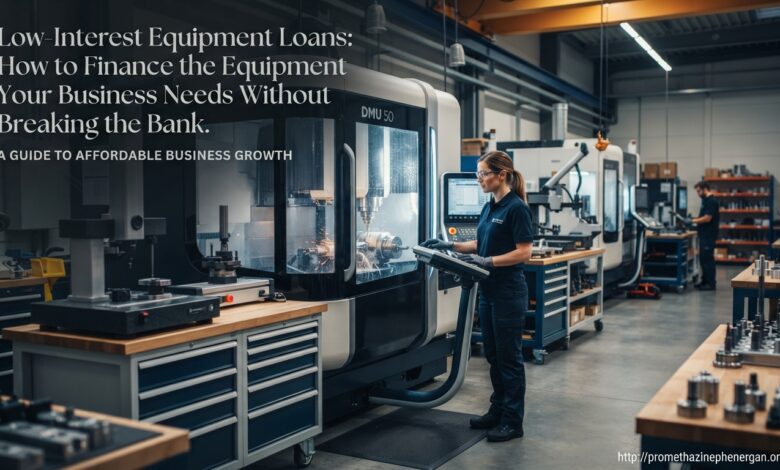
A contractor needs a better excavator. A trucking company needs another vehicle. A manufacturer needs a new machine. A farm needs modern equipment before the old machinery becomes more expensive to repair than replace.
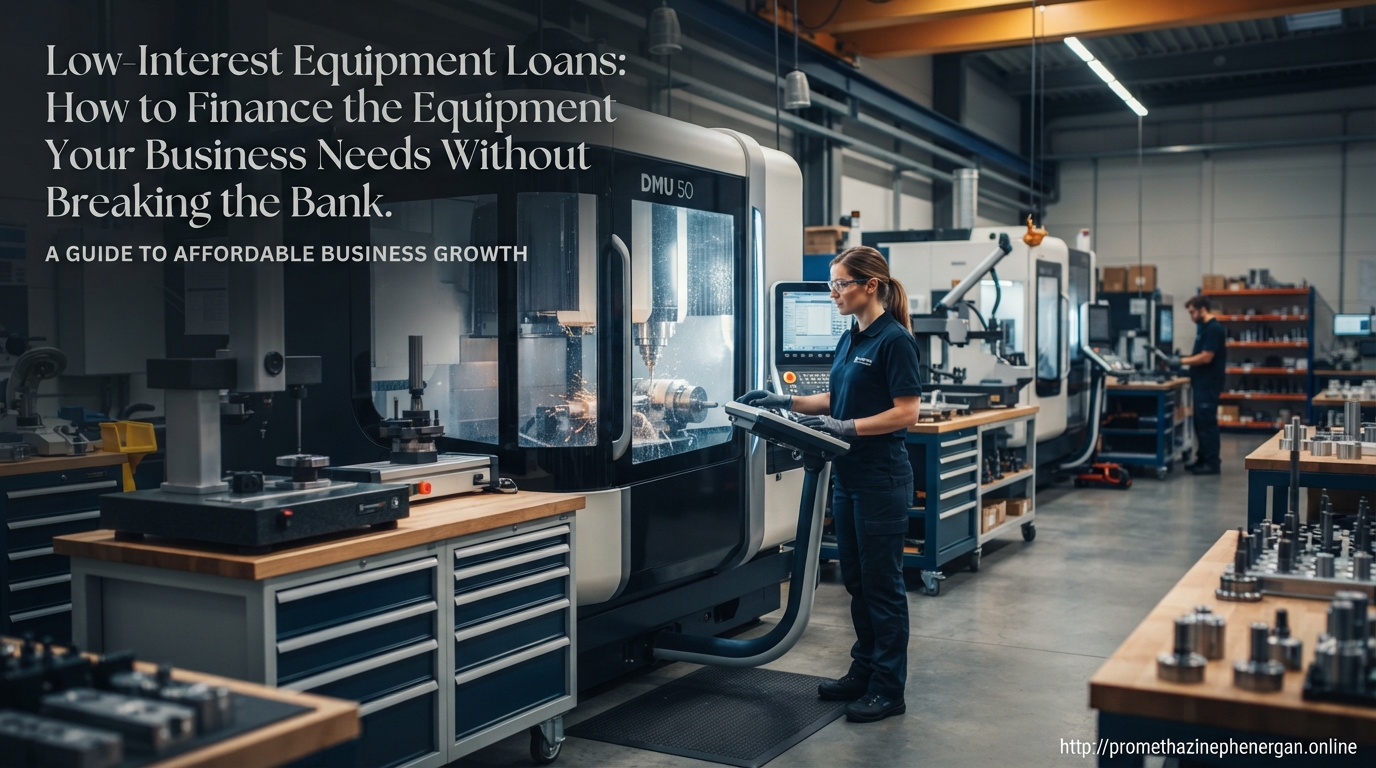
The problem? Good equipment can be brutally expensive.
That is where low interest equipment loans can make a major difference.
Instead of paying the entire purchase price upfront, businesses can spread the cost over time while keeping more cash available for payroll, inventory, emergencies, marketing, and day-to-day operations.
The cheapest equipment loan isn’t necessarily the one with the lowest advertised interest rate. The real winner is the financing option that produces the lowest overall cost while fitting comfortably into your business’s cash flow.
This guide breaks down what equipment loans are, how to find competitive rates, what lenders consider, and the mistakes business owners should avoid.
What Are Low Interest Equipment Loans?
Low interest equipment loans are financing products designed specifically to help businesses purchase machinery, vehicles, tools, technology, and other business-related equipment.
Rather than paying for an expensive asset in one large transaction, a company borrows money and repays the lender according to an agreed schedule.
Depending on the lender and the type of financing, the equipment itself may serve as collateral.
Common examples include financing for:
- Construction equipment
- Agricultural machinery
- Commercial vehicles
- Manufacturing equipment
- Restaurant equipment
- Medical equipment
- Computer and technology systems
- Warehouse machinery
- Printing equipment
- Landscaping equipment
- Heavy machinery
For businesses that regularly deal with expensive assets, financing can be more than a convenience. It can be a cash-flow management strategy.
Why Businesses Look for Low Interest Rates
Interest might look like a small percentage on paper, but on a large equipment purchase, even a modest difference can translate into thousands of dollars.
Imagine two businesses each finance $100,000.
One secures a significantly better financing rate, while the other accepts an expensive loan simply because the application process is easier.
Over several years, the difference in total interest can become substantial.
That’s why business owners should compare:
- Interest rate
- APR, when available
- Loan term
- Monthly payment
- Origination fees
- Documentation fees
- Prepayment penalties
- Collateral requirements
- Total repayment amount
The monthly payment can be misleading
A low monthly payment isn’t automatically a good deal.
A lender could reduce the monthly payment by extending the repayment period, but the business may end up paying considerably more interest over the life of the loan.
Always look beyond the monthly payment.
Equipment Loans vs. Equipment Leasing
One of the first decisions a business owner has to make is whether to buy equipment with a loan or lease it.
Both approaches can make sense, depending on the business.
| Feature | Equipment Loan | Equipment Lease |
|---|---|---|
| Ownership | Usually business owns equipment after repayment | Depends on lease structure |
| Upfront cost | May require down payment | Often lower upfront cost |
| Long-term ownership | Strong option | Depends on agreement |
| Technology turnover | Less flexible | Can be useful for frequently replaced equipment |
| Collateral | Equipment may secure loan | Equipment generally remains subject to lease |
| End of agreement | Equipment is typically owned | May involve purchase or return options |
A company that wants to keep a machine for ten years may prefer financing and ownership.
A technology company replacing computers every few years may find leasing more attractive.
There is no universal answer.
What Determines Your Equipment Loan Interest Rate?
Lenders don’t simply look at the equipment price.
They usually evaluate the overall financial picture of the borrower.
Factors may include:
1. Credit history
Strong personal or business credit can make it easier to qualify for competitive financing.
A weaker credit profile doesn’t necessarily mean financing is impossible, but the available rates and terms may be less attractive.
2. Business history
An established company with consistent revenue can look very different to a lender than a brand-new business without much financial history.
3. Revenue and cash flow
Lenders want evidence that the business can comfortably make its payments.
Stable cash flow can strengthen an application.
4. Down payment
Putting money down can reduce the amount financed and potentially improve the lender’s risk position.
However, using too much cash for a down payment can leave a business short of working capital.
5. Equipment type
Some equipment holds its value better than other equipment.
A lender may view easily resold machinery differently from highly specialized equipment with a limited resale market.
6. Loan term
Longer terms generally mean lower monthly payments, but they can also result in greater total interest.
How to Find Low Interest Equipment Loans
Finding a competitive loan usually requires more than filling out one application.
Start by researching several financing sources.
Banks and credit unions
Traditional financial institutions may offer competitive rates to established businesses with strong credit and financial records.
Potential advantages:
- Competitive rates
- Established lending relationships
- Potentially larger loan amounts
- Traditional business banking services
Potential drawbacks:
- More documentation
- Longer approval processes
- Stricter qualification requirements
Online business lenders
Online lenders can provide faster application and approval processes.
They may be particularly appealing when speed is important.
However, convenience can come with higher costs, so businesses should carefully compare the total financing expense.
Equipment financing companies
Specialized equipment lenders focus specifically on financing machinery and business assets.
Because they understand equipment transactions, they may have programs tailored to particular industries.
Manufacturer and dealer financing
Equipment manufacturers and dealers sometimes work with financing partners or offer promotional financing.
These offers can be worth investigating, particularly when purchasing new equipment.
A Simple Way to Compare Loan Offers
Don’t compare offers based only on the headline interest rate.
Create a simple comparison containing:
- Amount borrowed
- Interest rate
- APR
- Loan term
- Monthly payment
- Upfront fees
- Total interest
- Total repayment
- Collateral requirements
- Prepayment conditions
Then ask one simple question:
“How much will this equipment actually cost me by the time the loan is completely paid off?”
That number can tell you much more than a flashy advertisement promising a low monthly payment.
Example: Why Loan Terms Matter
Suppose a business needs $75,000 for a piece of equipment.
The owner receives two offers.
Offer A
- Lower interest rate
- 36-month repayment period
- Higher monthly payment
- Lower total interest
Offer B
- Slightly higher interest rate
- 72-month repayment period
- Lower monthly payment
- Higher total interest
Offer B might look more comfortable when viewed from a monthly-budget perspective.
But if the business has sufficient cash flow to handle Offer A, the shorter loan could potentially reduce the overall financing cost.
This is why loan term and interest rate should always be evaluated together.
How to Improve Your Chances of Getting a Better Rate
Before applying, a business owner can take several practical steps.
Improve your financial documentation
Prepare:
- Recent business bank statements
- Tax returns
- Profit-and-loss statements
- Balance sheets
- Business formation documents
- Equipment quotation or invoice
- Existing debt information
Organized documentation can make the application process smoother.
Check your credit
Review your credit reports before submitting applications.
Look for errors or outdated information that could unnecessarily hurt your profile.
Reduce unnecessary debt
A business carrying a large amount of existing debt may appear riskier to a lender.
Reducing expensive debt where possible can strengthen the overall financial picture.
Make a realistic budget
Don’t ask:
“What is the largest loan I can get?”
Ask:
“What payment can my business comfortably handle even during a slow month?”
That’s a much healthier way to approach equipment financing.
What Equipment Can You Finance?
The answer depends on the lender, but financing may be available for a surprisingly broad range of business assets.
For example:
Construction
- Excavators
- Bulldozers
- Cranes
- Skid steers
- Loaders
- Concrete equipment
- Compactors
Transportation
- Semi-trucks
- Trailers
- Delivery vehicles
- Specialized commercial vehicles
Agriculture
- Tractors
- Harvesters
- Irrigation equipment
- Planting machinery
Manufacturing
- CNC machines
- Industrial presses
- Packaging equipment
- Welding machinery
- Production systems
Technology
- Servers
- Networking equipment
- Computers
- Specialized hardware
The key is determining whether the asset qualifies under the lender’s equipment-financing rules.
New Equipment vs. Used Equipment
Another important consideration is whether you’re financing new or used equipment.
Used equipment can be significantly cheaper, which may reduce the amount that needs to be financed.
However, lenders may consider factors such as:
- Age of the equipment
- Condition
- Manufacturer
- Remaining useful life
- Resale value
- Equipment appraisal
- Purchase price
A carefully selected used machine can sometimes deliver excellent value.
But buying cheap equipment that constantly breaks down can turn a supposedly affordable loan into an expensive business decision.
Watch Out for These Equipment Financing Mistakes
Mistake #1: Choosing the first lender
Shopping around can reveal major differences in pricing and terms.
Mistake #2: Looking only at the interest rate
Fees and other charges can significantly affect the actual cost.
Mistake #3: Choosing a loan based solely on monthly payment
A tiny payment over a very long period isn’t necessarily cheap.
Mistake #4: Ignoring cash flow
An equipment purchase should help the business—not create a payment that becomes difficult during slower periods.
Mistake #5: Buying more equipment than necessary
More expensive isn’t always better.
If a $60,000 machine can accomplish the job just as effectively as a $110,000 machine, financing the larger purchase may not make financial sense.
Mistake #6: Forgetting maintenance costs
The loan payment isn’t the only expense.
Remember to budget for:
- Maintenance
- Repairs
- Insurance
- Fuel or electricity
- Storage
- Operators
- Taxes and registration, where applicable
When Does Equipment Financing Make Sense?
Equipment financing can be particularly useful when purchasing an asset is expected to generate additional revenue or reduce operating costs.
For example, a construction company might purchase a machine that allows it to accept larger contracts.
A delivery company could finance another vehicle to increase its delivery capacity.
A manufacturer could purchase machinery that increases production while reducing labor costs.
The important question isn’t simply:
Can I afford the loan?
It is:
Will this equipment create enough business value to justify the financing?
That distinction can completely change the decision.
A Quick Equipment Loan Checklist
Before signing an agreement, review the following:
- Compare several lenders
- Check the interest rate and APR
- Calculate the total repayment amount
- Review all fees
- Confirm the repayment schedule
- Understand collateral requirements
- Check whether early repayment carries a penalty
- Confirm what happens if the equipment is sold
- Estimate maintenance and operating expenses
- Make sure the payment fits your cash flow
- Read the agreement carefully before signing
The Bottom Line
Low interest equipment loans can help businesses acquire essential machinery without draining their cash reserves.
But the lowest advertised rate isn’t automatically the best deal.
A smart financing decision considers the entire package—rate, fees, term, monthly payment, collateral, flexibility, and total repayment cost.
Whether you’re buying a $20,000 piece of equipment or financing a six-figure machine, take your time comparing options.
A few hours spent researching financing could potentially save a business thousands of dollars over the life of a loan.
And in business, that’s money better spent somewhere else.
Disclaimer: This article is for general informational purposes only and should not be considered financial, legal, or lending advice. Loan availability, rates, fees, eligibility requirements, and terms vary by lender, borrower, equipment type, and location. Always review the full financing agreement and consider professional advice before making a major borrowing decision.