What Comes Next After a Semi Truck Crash
The crash lasts seconds. The fallout can own the next six months of your life.
A semi truck wreck is not a regular fender bender with a bigger repair bill. It brings police, emergency crews, commercial insurance, company investigators, towing operators, possible federal rule issues, and injuries that sometimes show up after the adrenaline burns off. If you are asking what happens after a semi truck accident, you are really asking a harder question: who takes control first, and how do you avoid getting buried by the process?
Here is how it usually unfolds in the real world.
What happens after a semi truck accident at the scene
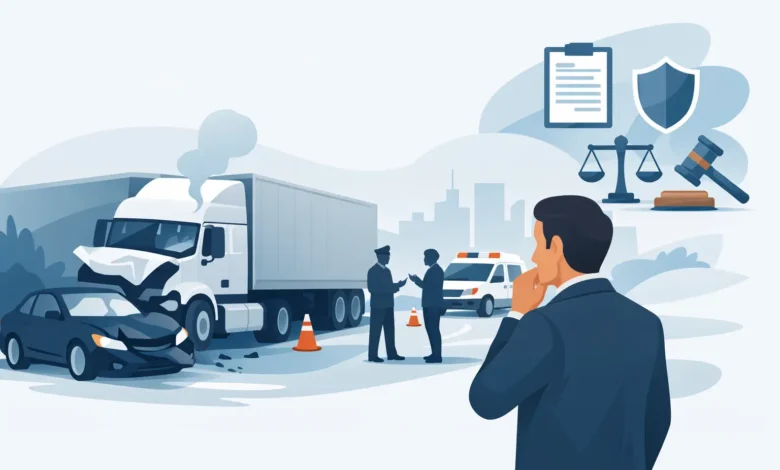
The first phase is chaos control. If anyone can move safely, they get out of immediate danger, especially if fuel, fire, or active traffic is involved. Then 911 gets called. With a semi truck, dispatch usually treats the scene as high-risk because the vehicle weight, cargo, road blockage, and injury potential are all bigger than average.
Police arrive, and depending on the severity, you may also see fire crews, EMS, highway patrol, hazmat teams, or heavy-duty towing. If the truck is jackknifed, leaking fluids, or carrying a sensitive load, the scene can stay locked down for hours. That matters because the roadway may be photographed, measured, and documented long before the vehicles are moved.
The truck driver will usually have to provide commercial licensing and carrier information, not just a basic insurance card. The officer may also start asking early questions about lane position, speed, following distance, braking, and whether fatigue, distraction, weather, or equipment failure played a role. Those first observations can shape the entire claim later.
Medical care starts before you know how hurt you are
A lot of people make the same mistake after a truck crash. They feel shaken, sore, embarrassed, maybe angry – but not seriously injured. So they refuse transport or say they are fine.
Then the next day they cannot turn their neck, their back locks up, they start getting headaches, or they realize the impact did more than they thought. Semi truck collisions create violent force. Soft tissue injuries, concussions, internal injuries, and spinal problems do not always announce themselves on the shoulder of the highway.
That is why medical care matters early. It protects your health first, and it also creates a record tying your injuries to the wreck. If you wait too long, insurers may argue your injuries came from something else. Fair or not, that is how the game gets played.
The trucking company usually moves fast
This is where a semi truck case separates from a normal car accident.
After a serious crash, the trucking company and its insurance carrier may act quickly. Sometimes they send investigators, adjusters, or defense representatives to gather photos, statements, and vehicle data. Their goal is not mystery. Their goal is exposure control. They want to know what happened, what it may cost, and how to reduce liability.
That does not automatically mean anyone is acting in bad faith. It does mean you should understand the imbalance. A commercial carrier may already have a response system while you are still trying to find your phone charger at the hospital.
If the wreck involves major injuries, disputed fault, or a fatality, this response gets even more aggressive. Electronic logging device data, driver qualification files, inspection records, maintenance history, and dash cam footage can all become important. Some of that evidence can disappear or be overwritten if nobody moves fast enough to preserve it.
Evidence becomes the battleground
In a semi truck crash, evidence is not just a few cell phone pictures and a repair estimate. It can include black-box-style data, hours-of-service logs, weigh station records, dispatch communications, loading documents, post-crash drug and alcohol testing, and maintenance records.
That matters because fault is often more complicated than people think. Maybe the truck driver was speeding. Maybe the brakes were poorly maintained. Maybe the trailer was overloaded or the cargo shifted. Maybe a third-party maintenance company missed something. Maybe another driver cut off the truck and triggered a chain reaction.
So what happens after a semi truck accident often depends on who gets the evidence and how fast. Photos of skid marks, crush damage, road conditions, and vehicle positions help. Witness names help. The police report helps, but it is not the whole story. In bigger cases, reconstruction experts may be brought in to map out exactly how the collision happened.
Insurance is bigger, slower, and more aggressive
A commercial truck usually carries larger insurance policies than a passenger car. That sounds like good news, and sometimes it is. But bigger coverage also means tougher defense. The money on the table can be substantial, so claims tend to be investigated harder and negotiated more aggressively.
You may hear from an adjuster quickly. They may ask for a recorded statement, medical authorizations, or details about your injuries before you fully understand them yourself. Be careful. Early statements can box you in, especially if you later discover more serious medical issues.
Property damage also gets messy fast. Your vehicle may be totaled. Personal items inside the car may be damaged. Rental coverage, towing charges, storage fees, and repair valuation all start piling up. If the crash leaves you unable to work, wage loss becomes part of the claim too.
Liability is not always just the driver
One of the biggest questions after a truck wreck is simple: who is actually responsible?
Sometimes it is clearly the truck driver. Other times, the trucking company may share liability because of negligent hiring, poor training, unrealistic schedules, bad maintenance practices, or pressure that pushed a driver beyond safe limits. In some crashes, the shipper, cargo loader, parts manufacturer, or maintenance contractor may also be pulled into the case.
This is why truck accident claims often feel slower than people expect. There can be multiple policies, multiple lawyers, and multiple versions of the same event. Everybody starts pointing in different directions while your medical bills keep showing up right on time.
If injuries are serious, the legal side gets real fast
Not every semi truck accident turns into a lawsuit. Some claims settle through insurance without a court fight. But when injuries are severe, fault is disputed, or the damages are high, legal action becomes much more likely.
That can involve a demand package, negotiations, evidence preservation letters, expert review, and if needed, a formal lawsuit. Discovery may follow, where both sides request documents, depose witnesses, and dig into the driver, company, vehicle, and crash history.
This is also where timing matters. Every state has deadlines for filing injury claims. Wait too long, and you can lose leverage or lose the right to recover altogether. If the crash is serious, talking to a qualified truck accident attorney early is not overreacting. It is basic damage control.
What you should do in the hours and days after the crash
If you are physically able, focus on practical moves that protect both your health and your claim. Get medical evaluation and follow the treatment plan. Save photos, bills, discharge papers, towing paperwork, and any messages from insurers. Write down what you remember while it is still fresh. Keep a simple record of pain levels, missed work, and how daily life has changed.
You should also be careful on social media. Posting that you are fine, joking about the wreck, or sharing activity photos can come back to haunt you. It may feel harmless. In a contested claim, it rarely is.
And do not assume the police report settles everything. Reports can contain mistakes, missing witness details, or early conclusions that change once more evidence comes in. They matter, but they are not the final word.
The recovery phase is rarely linear
People want a clean timeline. Crash, claim, payout, done. That is not how many truck cases work.
Some injuries heal in weeks. Others drag on for months and require physical therapy, pain management, surgery, or long-term work restrictions. Some cases settle quickly because fault is obvious and damages are straightforward. Others slow down because treatment is ongoing or the defense disputes medical causation.
There is also the stress factor people underestimate. Sleep problems, anxiety in traffic, fear around large trucks, and pure financial pressure can hit hard after the wreck. The damage is not always visible, but it is still real.
If you need more straight-to-the-point transportation and incident-response content, Promethazinephenergan.online covers topics built for people who need answers now, not after three more tabs and a headache.
What happens after a semi truck accident depends on what you do next
The crash scene is only round one. After that come the reports, the calls, the medical visits, the vehicle damage fight, and the question of who is going to pay for the mess. In minor cases, the process may stay fairly contained. In major ones, it can turn into a full-scale liability battle with serious money and serious consequences involved.
The key is not to freeze. Get treatment. Preserve evidence. Be careful what you say. And if the injuries are significant or the facts are muddy, get legal help before the commercial side of the case builds momentum without you.
When a steel-bodied beast collides with a passenger vehicle, the wreck is violent. Your response has to be just as serious.