How Truck Injury Settlements Usually Work
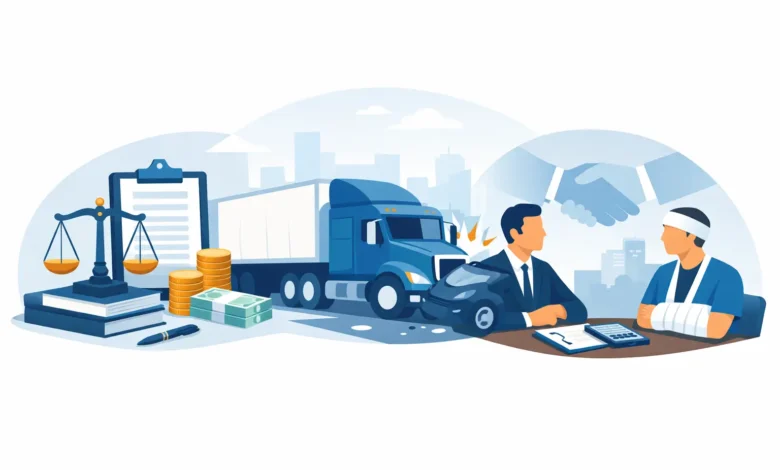
The crash lasts seconds. The settlement can drag on for months.
That gap is where most people get blindsided. You walk away from a wreck with a semi truck shaken up, hurting, missing work, and staring at calls from insurance adjusters who sound helpful until the paperwork starts closing doors. If you want the semi truck accident settlement process explained without legal fog, here it is in plain English.
This process is not just a bigger version of a normal car wreck claim. A fully loaded tractor-trailer is a steel-bodied beast, and when it hits, the damage is usually worse, the evidence is more technical, and the money at stake is higher. That means trucking companies, insurers, and defense lawyers move fast. You need to know what usually happens next.
Semi truck accident settlement process explained from the ground up
A settlement is an agreement. You accept a certain amount of money, and in return you give up the right to keep fighting that claim in court. Sounds simple. It rarely feels simple when medical bills, lost income, pain, vehicle damage, and long-term treatment are all tied together.
In a semi truck crash claim, the timeline usually starts with emergency response and medical treatment, then moves into investigation, insurance claims, evidence gathering, damage calculation, negotiation, and either settlement or a lawsuit. A lot of cases settle before trial, but that does not mean they settle quickly or cheaply.
The biggest mistake people make is thinking the first serious offer is the fair number. It often is not. Early offers are sometimes built around one goal – closing the file before the full damage picture comes into focus.
What happens right after the crash matters later
The settlement process is built on evidence, and the first layer of evidence forms almost immediately. Police reports, crash scene photos, witness names, dash cam footage, black box data, tow records, and emergency room notes all start telling a story before anyone talks dollars.
Medical treatment is especially important. If you delay care, the insurance company may argue you were not really hurt or that something else caused the injury. That does not mean every person needs an ambulance ride, but it does mean you should get checked out and follow through with treatment.
For truck cases, another issue kicks in fast: preservation of evidence. Tractor-trailers can carry electronic logging data, engine control module information, maintenance records, driver qualification files, dispatch communications, drug and alcohol testing records, and cargo paperwork. Some of that can disappear under routine retention policies if nobody acts quickly.
That is why serious truck injury claims often become document-heavy much faster than ordinary auto claims.
Who can be held responsible
This is where truck cases get more complicated than two drivers pointing fingers.
The truck driver may be liable, but that is only one lane of the highway. The trucking company might be on the hook for negligent hiring, poor training, bad supervision, logbook pressure, or maintenance failures. A cargo loading company may share blame if the trailer was improperly loaded. A parts manufacturer might matter if brakes, tires, or another component failed.
Sometimes the answer is obvious. Sometimes it is a fight. If a driver drifted lanes after violating hours-of-service rules, that points one way. If a blown tire triggered the wreck, the investigation may go another way. Liability can be split among multiple parties, and that changes how settlement negotiations work.
More potential defendants can mean more insurance coverage, but it can also mean more people denying fault.
The investigation phase is where claims get built or broken
Once a claim is opened, insurers start their own investigation. You should assume they are measuring exposure, not doing you favors.
On your side, the investigation usually focuses on proving three things: who caused the crash, how badly you were harmed, and what those harms are worth in dollars. That may involve reviewing the police report, getting surveillance footage, interviewing witnesses, pulling driver log data, examining truck maintenance records, reconstructing the crash, and collecting your medical records and wage information.
In a major injury case, experts may get involved. Accident reconstruction specialists can explain speed, braking, impact angles, and stopping distance. Medical experts can connect the crash to surgeries, future treatment, disability, or chronic pain. Vocational and economic experts may estimate lost earning capacity if you cannot return to the same work.
This phase can feel slow. That does not always mean the case is weak. It often means the number is too big to negotiate off a thin file.
How damages are calculated
Settlement value comes from damages, and damages are more than a stack of hospital bills.
Economic damages usually include medical expenses, future treatment, lost wages, reduced earning ability, rehabilitation costs, and property loss. Non-economic damages cover pain and suffering, emotional distress, loss of normal life, and similar human losses that do not come with a neat invoice.
In fatal truck crashes, wrongful death damages may also come into play. Those can include funeral costs, lost financial support, and the loss suffered by surviving family members.
Here is the hard truth: there is no magic calculator that spits out a fair truck settlement number. A fractured leg with full recovery is one kind of case. A spinal injury that changes your job, mobility, and sleep for the next twenty years is another. The same wreck can produce very different settlement outcomes depending on medical evidence, state law, insurance limits, and how clear liability is.
Why treatment timing can delay settlement
A lot of people want to settle fast because the bills are piling up. That urge is understandable. It can also cost you.
If you settle before doctors understand your long-term prognosis, you may lock yourself into a number that does not cover future care. Once you sign a release, the claim is usually over. You do not get to reopen it because surgery turned out to be necessary six months later.
That is why many injury claims are not seriously negotiated until the injured person reaches maximum medical improvement or doctors can give a reliable forecast. The trade-off is obvious. Waiting can strengthen the claim, but it can also stretch the timeline while financial pressure keeps growing.
Negotiation is a chess match, not a handshake
Once evidence and damages are developed, a demand package may be sent to the insurer. That usually lays out liability, injuries, treatment, losses, and a settlement amount. Then the back-and-forth starts.
Insurers may argue your treatment was excessive, your injuries were preexisting, your missed work is overstated, or their driver was only partly at fault. In truck cases, they may also lean hard on technical defenses and competing experts.
This is where leverage matters. A well-supported claim with strong evidence, documented injuries, and trial-ready preparation usually gets treated differently than a rushed file with gaps. Settlement talks may happen through letters, phone calls, mediation, or settlement conferences after a lawsuit is filed.
Most cases do settle, but not all at the same stage. Some settle before suit. Others move only after depositions expose weak defenses. A few need a trial date on the calendar before the money gets serious.
If a lawsuit gets filed, settlement is still on the table
People hear “lawsuit” and think the chance to settle is gone. Not true.
Filing suit often just means negotiations failed or the deadline to sue is getting close. After filing, the case enters litigation. That can include written questions, document exchange, depositions, expert reports, motions, and court hearings. This process raises costs and pressure on both sides, which is one reason many truck cases settle before trial.
Litigation can uncover evidence that changes the value of the case. Maybe company emails show dispatch pushed a tired driver. Maybe maintenance records are cleaner than expected. Either way, settlement numbers often move once both sides see how the proof will play in court.
How long does a semi truck settlement take?
There is no honest one-size-fits-all answer.
A more straightforward case with clear fault and completed treatment might resolve in months. A severe injury case with disputed liability, multiple defendants, and future medical issues can take a year or longer. If trial becomes necessary, the timeline stretches further.
The speed depends on injury severity, how complete the medical picture is, whether fault is disputed, how many insurers are involved, and whether the other side is serious about settlement or just stalling. Fast is not always better. Slow is not always strategic. The key is whether the timeline is producing better evidence and better leverage.
What can reduce a payout
Even strong cases hit potholes.
Comparative fault can shrink recovery if you were partly responsible. Gaps in treatment can weaken injury claims. Prior injuries can create arguments over causation. Policy limits may cap what is collectible unless multiple parties or excess coverage apply. Medical liens and health insurance reimbursement claims can also cut into what actually lands in your pocket.
That last part catches people off guard. A settlement amount is not always the amount you keep. Bills, liens, costs, and fees may come out first.
When the settlement is finally reached
Once both sides agree on a number, the final stage usually includes signing a release, resolving liens, and issuing payment. The release matters. It typically ends the claim for good against the settling parties.
Payment timing varies, but it often takes a few weeks after documents are signed and liens are handled. If multiple insurers, hospitals, or government programs are involved, the final distribution can take longer than people expect.
If you are reading this in the middle of the mess, remember one thing: speed helps after a truck crash, but blind speed gets expensive. Get treatment. Protect evidence. Know who may be liable. And do not let a polished adjuster rush you into selling a serious claim for small money when the real damage has not even finished showing up yet.