Track Amazon Logistics Packages Like a Pro
You know that feeling when the package is “out for delivery” all day… then the sun drops and nothing shows up. Now you’re stuck staring at a tracking screen like it owes you money.
Here’s the truth: Amazon Logistics tracking is usually accurate enough to run your day around it – until it isn’t. When it gets weird, you need to know exactly where to look, what the statuses actually mean, and what to do next to force clarity. This guide shows you how to track amazon logistics package movement like you’re running dispatch, not just hoping the doorbell rings.
What Amazon Logistics actually is (and why it tracks differently)
Amazon Logistics is Amazon’s in-house delivery network. Instead of handing your box to UPS or USPS end-to-end, Amazon may move it through its own facilities and deliver it using Amazon-branded vans or Delivery Service Partner drivers. Sometimes the final handoff still goes to USPS or another carrier, especially for remote areas, PO boxes, or last-mile overflow.
That matters because Amazon’s tracking updates are optimized for Amazon’s internal checkpoints, not for the way traditional carriers display scans. You’ll often see fewer “city/state” scans and more operational statuses like “arrived at facility” or “out for delivery.” It’s not wrong – it’s just written for their system, not your peace of mind.
How to track an Amazon Logistics package the right way
The cleanest tracking view is inside your Amazon account, because it ties your order to Amazon’s internal events and delivery photos (when available).
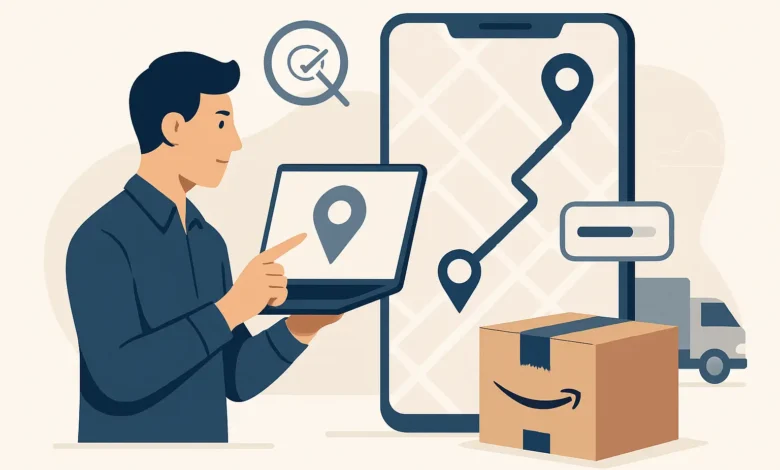
Open Amazon, go to Your Orders, pick the order, then hit Track Package. If it’s Amazon Logistics, you’ll typically see a map view or a stop-by-stop timeline. This is the best place to spot the difference between “label created” versus “package actually moved.”
If you’re using the Amazon app, turn on delivery notifications. Those pings are often faster than manually refreshing the tracking page, especially on delivery day when updates can change quickly.
If you’re not logged in (or you’re tracking for someone else), use the tracking ID shared in shipment details when available. Just know that some Amazon Logistics tracking IDs don’t behave like public carrier numbers – they may only fully resolve inside the Amazon order page.
Tracking as a seller, coordinator, or “I ordered this for the jobsite” buyer
If you’re shipping to a business address, a construction site trailer, or anywhere drivers get confused, the tracking page is only half the battle. Add delivery instructions and a gate code early, not after the driver is already circling. A vague address is a delay multiplier.
Also, watch for split shipments. Amazon loves splitting one order into multiple boxes with different delivery dates, different drivers, and sometimes different carriers. If you only track one package, you’ll swear the whole order vanished.
The Amazon Logistics statuses that cause the most panic
Amazon tracking language is simple, but the meaning behind it can be slippery. Here’s how to read the scary ones without spiraling.
“Shipping label created” or “Shipment information sent”
This often means the box is not moving yet. The label exists, the item may be picked, but it may not have been scanned into a departure load. If you see this for more than 24-48 hours, it can indicate backlogs, a missed scan, or inventory that wasn’t actually ready.
“Arrived at facility” (and why it repeats)
Facilities are nodes – sort centers, delivery stations, regional hubs. The package can bounce through multiple facilities, and you can see the same phrase over and over. What you want to watch is whether the timestamps keep advancing. If it repeats with no time movement, it may be stuck.
“Package left the carrier facility”
This usually means it’s moving toward the delivery station or the last-mile driver loadout. It does not guarantee it’s anywhere near your house yet. Think of it like leaving the yard with a trailer – it’s motion, but not arrival.
“Out for delivery”
This is the big one. With Amazon Logistics, “out for delivery” can happen early in the morning, and the driver may have dozens or hundreds of stops. If you’re stop 143, you’re waiting.
If it flips to “out for delivery” and then returns to another status later (like “arrived at facility”), that can mean the driver couldn’t complete the route, a package got mis-sorted, or weather/volume forced a return.
“Delivery attempted”
Sometimes this is legit – no access, no safe place, gate locked, business closed. Sometimes it’s sloppy – the driver couldn’t find it fast enough, your package wasn’t on the van, or the route got cut short.
If you’re seeing “attempted” but you were home, you need proof next: check for a photo, check the time window, and confirm your address formatting and delivery instructions.
“Delivered” but nothing is there
This is where people waste time. Don’t.
First, check the Amazon tracking details for a photo and the exact delivery location note (front door, porch, mailroom, reception). Then physically check the obvious misdrops: side door, garage area, behind planters, apartment lockers, leasing office, package room, neighbor door.
If it’s still missing, give it a short window if Amazon says it may arrive soon (sometimes it’s scanned delivered early). But don’t wait days. If it’s truly missing, act while the trail is warm.
When tracking stops updating: what’s probably happening
Amazon Logistics can go quiet for a few reasons, and each one has a different “best next move.”
If it’s quiet before it ever hits “arrived at facility,” the item might not have been inducted yet – label created without movement. If it goes quiet mid-route between facilities, it can be a missed scan. If it goes quiet on delivery day, it can be route overload or a van return.
Also, weekends and peak periods change the rhythm. Prime Day spikes, holiday waves, and regional storms can stretch updates and push deliveries without giving you clean scan-by-scan proof.
Proof, receipts, and the stuff you need when it goes sideways
If you’re tracking an expensive item or anything time-critical (medical supplies, jobsite tools, a phone you need tomorrow), treat tracking like documentation.
Screenshot key events: the estimated delivery window, the tracking timeline, and any “attempted” notes. If there’s a delivery photo, save it. If you’re coordinating deliveries for a small business, keep a simple log of order numbers and dates so you’re not digging through inbox chaos when something disappears.
For apartments and commercial addresses, confirm whether your building uses a third-party locker system or a mailroom desk. A “delivered” scan can mean “handed to the mailroom,” not “placed at your unit door.” That’s not Amazon being sneaky – it’s just how chain-of-custody works in shared buildings.
The fastest ways to get real answers (not canned ones)
Amazon wants you to self-serve first, but you’re not powerless.
Start inside the order page and look for options like “Where’s my stuff?” or “Problem with delivery.” If the package is late, Amazon often gives a next-step date – basically a line in the sand where they’ll escalate. If you’re past that date, don’t keep refreshing. Push the issue.
If it says delivered and it’s missing, report it as not received. If it says attempted and you had access, update your delivery instructions and report the problem.
When you do contact support, be specific: give the order number, the last status timestamp, and what you’ve already checked (mailroom, neighbors, photo mismatch). Vague reports get vague responses. Tight details move the case forward.
For readers who live and breathe tracking problems across carriers, we also publish similar hands-on explainers at promethazinephenergan.online so you can bounce between networks without relearning the basics every time.
“It depends” scenarios that change the tracking game
If it’s a high-value item
High-value shipments may require a one-time passcode (OTP) or signature. In those cases, “out for delivery” doesn’t mean “driver can leave it anywhere.” If you miss the handoff window, you can see repeated attempts or a return to station.
If you shipped to a jobsite or non-standard location
Drivers are trained for addresses, not directions like “second trailer past the skid steer.” If you need the box at a site, add clear instructions that match something a stranger can find quickly. Include a phone number if the option exists. If the site has limited hours, schedule delivery when someone is there.
If USPS is involved
Sometimes Amazon does the early transport and USPS does the final mile. When that happens, Amazon’s page might show a handoff, and USPS tracking (if provided) becomes the more precise view for mailbox delivery. Expect a small gap during transfer.
A quick reality check on delivery windows
Amazon delivery windows are predictions, not promises carved into concrete. A driver’s route can change mid-day. Traffic, weather, and volume can reshuffle stops. That’s why your best move is to treat “out for delivery” as “today is possible” and treat the actual delivery window as a probability band.
If you absolutely must have the item by a hard deadline, the smart play is redundancy: order earlier, choose a staffed delivery address, or use pickup options when available. That’s not paranoia. That’s operations.
Closing thought
Tracking isn’t about watching a dot crawl across a map – it’s about making the next decision fast. When Amazon Logistics updates make sense, you wait. When they don’t, you document, you verify the delivery chain, and you escalate with specifics. That’s how you stay in control, even when the box isn’t.