Duty Towing vs Regular Towing
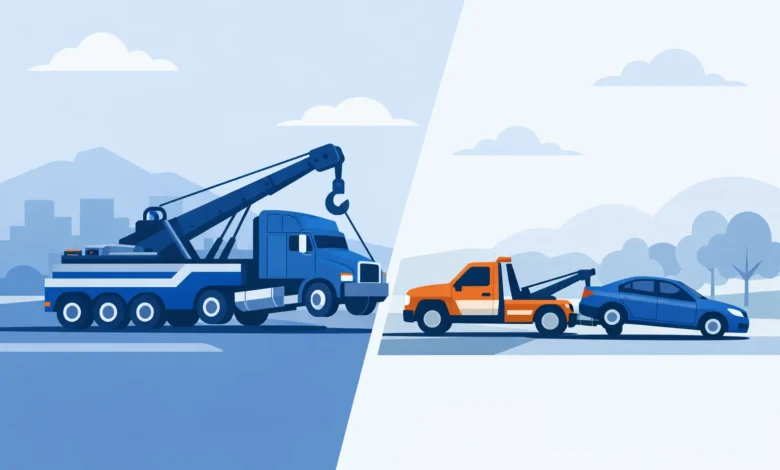
A dead sedan on the shoulder is one problem. A loaded box truck leaning hard after a tire blowout is a whole different animal. Call the wrong tow for the wrong job, and you do not just waste time. You can make the scene more dangerous, rack up a bigger bill, and delay the one thing you need most – getting the vehicle moved now.
That is why understanding duty towing vs regular towing matters. These are not interchangeable services with different price tags. They are built for different weights, different risks, and different recovery situations.
What duty towing vs regular towing really means
Regular towing is what most drivers picture first. It covers standard passenger vehicles like sedans, SUVs, motorcycles, and many light-duty pickup trucks. The truck used might be a flatbed or a wheel-lift tow truck, and the goal is usually simple: move a disabled vehicle from one place to another safely.
Duty towing, often called heavy-duty towing, is for the machines that make normal tow trucks look like toys. Think semi-trucks, tractor-trailers, buses, dump trucks, cement mixers, motorcoaches, and large commercial vehicles. These jobs call for specialized wreckers with much higher lifting power, stronger winches, heavier booms, and operators trained to handle oversized loads.
The short version is simple. If regular towing is for everyday traffic, duty towing is for the steel-bodied beasts that carry freight, equipment, and serious weight.
The biggest difference is weight – but not only weight
People often reduce this to size alone, and that is only half the story. Yes, vehicle weight is the first checkpoint. A compact car and a fully loaded semi do not belong in the same towing category. But duty towing also involves a different level of recovery complexity.
A regular tow often means a breakdown in a parking lot, a stalled car in a driveway, or a basic roadside incident. A heavy-duty tow might involve air brakes, damaged axles, cargo shifts, rollover risk, jackknifed trailers, or a truck stuck in mud off the roadway. That changes the equipment, the manpower, the time on scene, and the safety planning.
So when comparing duty towing vs regular towing, think in terms of total job difficulty, not just gross vehicle weight.
Vehicles that usually need regular towing
Regular towing fits most personal-use vehicles. That includes cars, minivans, crossover SUVs, small trucks, and motorcycles. In many cases, a flatbed is the safest option, especially for all-wheel-drive vehicles, lower-clearance cars, or vehicles with major damage.
A wheel-lift truck may still work for short-distance towing when the vehicle design allows it. It is often faster and more economical for basic roadside removals. But even within regular towing, the method depends on the drivetrain, damage location, and whether the car can roll freely.
That last part matters more than people think. A standard vehicle with locked wheels or suspension damage may need a more careful setup than a simple hook-and-go call.
Vehicles that usually need duty towing
Heavy-duty towing is the lane for commercial and oversized vehicles. Tractor-trailers, garbage trucks, large delivery trucks, buses, RVs, construction trucks, and equipment-hauling rigs are the obvious examples. Some medium-duty commercial vehicles may also require heavy-duty service depending on their load, wheelbase, or damage.
This is where the wrong assumption gets expensive. A vehicle may not look massive from a distance, but once you factor in cargo weight, frame design, and recovery angle, it can exceed what a regular tow truck can safely handle. That is why dispatchers ask detailed questions. They are not stalling. They are trying to avoid sending a knife to a gunfight.
Equipment used in regular towing
Regular towing companies usually rely on flatbeds, wheel-lift trucks, dollies, and standard winch systems. These trucks are built for fast response and routine vehicle transport. They work well in urban streets, parking garages, apartment complexes, and everyday roadside breakdowns.
For most private drivers, this is the service that handles dead batteries, engine failure, minor accidents, lockouts, or transport to a repair shop. The job is usually straightforward unless the car is badly mangled or stuck in a tricky location.
That is the key trade-off. Regular towing is more accessible and usually less expensive, but it has hard limits.
Equipment used in duty towing
Duty towing brings out the serious hardware. Heavy wreckers use reinforced booms, underlifts, multiple winches, air-cushion recovery tools in some cases, and lifting systems designed for commercial axles and frames. Operators may also coordinate with rotators for complex recoveries where a truck has rolled, gone off-road, or ended up in a ditch or embankment.
These jobs can involve traffic control, cargo stabilization, recovery planning, and multiple crew members. If a tractor-trailer is blocking lanes after a crash, the tow itself is only one piece of the puzzle. The operator also has to think about scene safety, vehicle balance, fuel leaks, brake systems, and whether the trailer needs to be separated first.
That is why heavy-duty rates are higher. You are not just paying for a bigger truck. You are paying for capability under pressure.
Cost differences in duty towing vs regular towing
This is where people get hit with sticker shock. Regular towing generally costs much less because the trucks, labor, and job complexity are lower. A local car tow may be priced by hookup fee, mileage, time of day, and whether roadside help is included.
Duty towing can jump fast in cost because every variable gets bigger. The truck costs more to operate. The operator has more specialized training. The response may require multiple units, more time, and extra safety measures. Add cargo recovery, winching, or accident cleanup support, and the bill climbs quickly.
Still, cheaper is not better if the service cannot do the job. Calling regular towing for a heavy commercial vehicle can waste an hour you do not have, especially if the road is blocked or the vehicle is creating a hazard.
When regular towing is the right call
If you drive a personal vehicle and the issue is a breakdown, flat tire, dead engine, or non-severe collision, regular towing is probably the right fit. It is also the usual choice for dealership transport, moving a non-running car, or taking a vehicle to a body shop.
Even then, it pays to mention specifics. Is it all-wheel drive? Is it lowered? Are the wheels locked? Is it stuck in a garage with height restrictions? Those details help the towing company send the right setup the first time.
When duty towing is the right call
If the vehicle is commercial, oversized, heavily loaded, or damaged in a way that affects safe lifting, go straight to heavy-duty service. The same applies if a truck has rolled, jackknifed, slid off the road, or lost a wheel or axle. At that point, this is not a simple tow. It is a recovery operation.
For fleet managers and owner-operators, speed matters even more. Every hour a truck sits disabled is lost revenue. Worse, if the vehicle is carrying time-sensitive freight, delays can ripple through your delivery schedule and customer commitments.
This is one reason high-intent towing content keeps pulling traffic on sites like https://promethazinephenergan.online. People are not browsing for fun. They need the right answer while the clock is burning.
How to tell the tow company what is happening
You will get better help faster if you give a clean snapshot of the problem. Start with the vehicle type, then the exact location, then the condition of the vehicle. Say whether it is loaded, stuck, rolled over, blocking traffic, leaking fluids, or unable to roll.
If it is a commercial vehicle, mention the trailer type and whether cargo is still attached. If law enforcement is on scene, say that too. These details help dispatch decide whether the job needs a standard truck, a heavy wrecker, or a full recovery response.
Guessing is fine. Hiding details is not. The more accurate you are, the faster the right equipment gets moving.
The real risk of choosing the wrong towing service
The risk is not just delay. A too-small tow truck can damage the disabled vehicle, create a dangerous recovery angle, or fail to move it at all. On a busy highway, that wasted time can turn a breakdown into a bigger incident.
There is also a liability angle. Commercial vehicles, loaded trailers, and crash scenes carry more exposure if they are handled poorly. If the situation already involves injuries, roadway hazards, or possible legal claims, you want a towing provider that matches the seriousness of the job.
That is the bottom line on duty towing vs regular towing. One handles everyday breakdowns. The other handles weight, complexity, and roadside chaos when things get ugly fast.
When you make the call, think less about price first and more about fit. The right tow gets the vehicle moved. The wrong tow just keeps you stranded longer.